
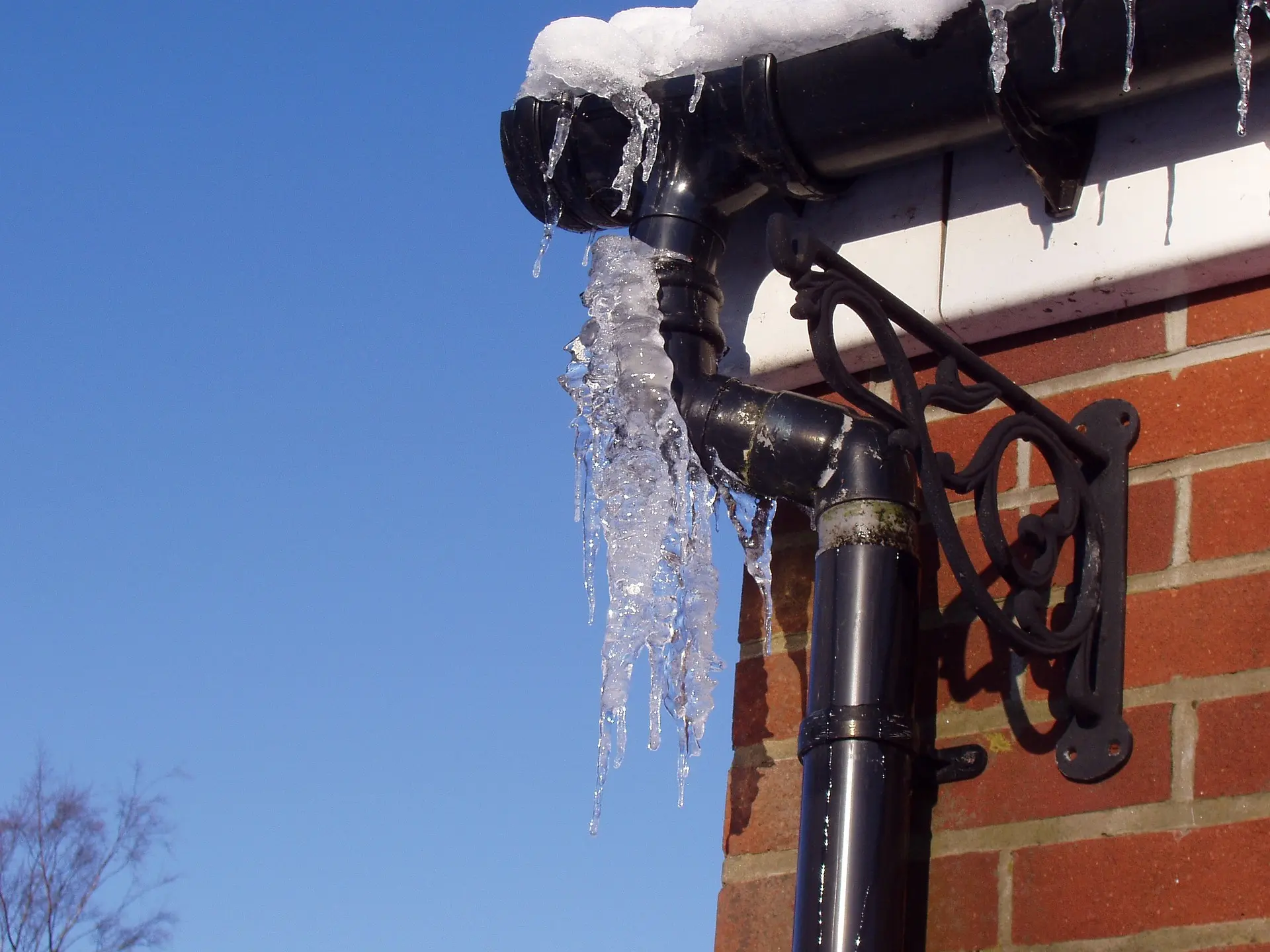




An ice dam is a ridge of ice that forms along the edge of a roof and stops melting snow from draining off. The water pools behind it, backs up under the shingles and leaks into the attic, where it soaks insulation and shows up as stained ceilings, wet walls and, if it stays wet, mold. Outside, ice dams can loosen shingles and pull down gutters.
The ice itself is a roofing problem. The water that gets inside is a separate problem, and it is usually the more expensive one when nobody deals with it. Green Genie provides water damage restoration in Buffalo and Western New York, not roof work, so this guide covers both sides: why ice dams form, what they damage, and who to call for each part.
What Causes Ice Dams?
Ice dams need three things at the same time: snow on the roof, heat reaching the upper part of the roof, and freezing air outside. The University of Minnesota Extension puts the condition plainly: “higher portions of the roof’s outside surface must be above 32 degrees F (freezing), while lower surfaces are below 32F.”
The heat comes from the house. Warm air escapes into the attic through gaps in the ceiling below it, such as around light fixtures, and from leaky ductwork and chimneys. That warms the roof deck over the living space, so the snow there melts from underneath. The water runs down to the eaves, which hang out past the heated walls and stay cold, and it freezes again. Every melt adds to the ridge. Extension researchers note that in many homes, air leakage is “the major mode of heat transfer that leads to the formation of ice dams.”
Why Buffalo Homes Are Prone to Ice Dams
Buffalo averages 95.4 inches of snow a year, according to the National Weather Service’s 1991 to 2020 normals. Ice dams need snow that sits on the roof through cold spells, and lake-effect storms followed by a deep freeze deliver exactly that. A local roofer told WKBW during the February 2026 cold snap that ice dams were keeping crews busy and pointed to heat loss as the cause.
Housing age plays a part too. About 61% of homes in the city of Buffalo were built in 1939 or earlier, according to the Census Bureau’s American Community Survey. In an older house, it can be hard to know what is in the attic until something leaks. When it does, it becomes water damage in Buffalo that starts at the top of the house instead of the basement.
What Damage Can Ice Dams Cause?
Roof and Gutters
University of Missouri Extension lists “dislodged roof shingles” and “sagging gutters” among the effects. FEMA’s snow load guide adds that ice dams reduce a roof’s ability to shed snow and create “a concentrated load at the eaves.” If you are not sure what you are looking at, see what roof water damage looks like.
Attic Insulation
Water that backs up under shingles lands in the attic first, on top of the insulation. Loose-fill insulation can lose its insulating value, or R-value, when it gets wet, according to the North American Insulation Manufacturers Association. Wet insulation also holds water against the ceiling below it, which keeps the drywall wet longer.
Ceilings and Walls
The University of Minnesota Extension notes that water from the attic “could flow into exterior walls or through the ceiling insulation and stain the ceiling finish.” That is why ice dam stains usually appear along the outside edge of a room, under the eaves. Drywall that stays wet can sag, and paint can bubble or peel. Our guide on whether ceiling drywall needs replacing after a leak covers that decision.
Mold and Wood Decay
“Moisture entering the home from ice dams can lead to the growth of mold and mildew,” according to the University of Minnesota Extension. Missouri Extension adds that long-term wetting can cause “structural framing members to decay.” If the attic stays wet, mold can grow there too, and attic mold removal becomes a separate job.
Water Leaking From the Ceiling After Snow: What It Usually Means
A drip or stain that shows up during a thaw, on a sunny afternoon after a snowfall, or a few days after a storm, near an exterior wall on the top floor, fits the ice dam pattern. The snow melts during the day, runs down to the ice at the edge, and backs up into the roof.
It is not the only explanation. A pipe that froze in an outside wall can leak when it thaws, and a damaged roof can leak in any weather. If the water appears away from the exterior walls or in a room with plumbing above it, look at other kinds of cold-weather water damage before blaming the roof.
The Leak Stops. The Damage Does Not.
Many ice dam leaks stop once the weather warms up and the ice melts. That is when many homeowners decide the problem has gone away. But the insulation and drywall that soaked up the water are still wet, and they dry slowly in a closed attic in winter.
The EPA advises cleaning and drying “any damp or wet building materials and furnishings within 24-48 hours to prevent mold growth.” Inside a ceiling, you cannot see whether that happened. EPA’s mold course notes that investigators use moisture meters to find wet areas, including hidden ones. That measurement, not a stain that has stopped spreading, is how you know the house is dry.
There is a cleanliness question too. In March 2026, the committee that maintains ANSI/IICRC S500, the industry standard for water damage restoration, stated that water entering from the top down during weather events is “not automatically considered Category 3 Water,” meaning grossly contaminated. It also noted that “time and temperature” affect contamination. In plain terms, snowmelt starts clean, but water that sits in insulation and framing for days can change category. A trained technician judges it on site.
Three Problems, Three Different Calls
An ice dam leak is really three problems, and each one belongs to a different trade:
- The ice on the roof: a roofer or an ice dam removal company. Green Genie does not do this work.
- The water inside the house: a water damage restoration company to find the wet areas, remove what cannot be dried, dry the rest and confirm it with meter readings. This is our work.
- The reason it formed: an insulation or energy contractor to seal air leaks and add insulation. New York’s NYSERDA runs EmPower+, which can cover up to 100% of the cost of upgrades such as air sealing and insulation for low-income households (up to 50% for moderate-income households, with caps), and Comfort Home, which offers incentives for air sealing and insulation packages. Check current eligibility on NYSERDA’s site.
If there is ice on the roof but no water inside, you do not need a restoration company. Call a roofer and keep an eye on the top-floor ceilings.
What Not to Do
- Do not climb onto the roof or chip at the ice. Massachusetts’ state guidance is direct: “Do not get on your roof or chip away at the ice from the ground,” and “Falling ice can be fatal.”
- Do not use sharp tools on the roof. FEMA warns against picks and other sharp tools when removing snow.
- Know the collapse warning signs. FEMA lists sagging ceiling tiles or boards, popping or creaking noises, doors or windows that no longer open or close, severe roof leaks and cracks in walls or masonry. If you see them, FEMA says to leave the building and contact a qualified design professional.
- Do not wait for the stain to dry on its own. Photograph it, then have the area checked with a meter.
Does Insurance Cover Ice Dam Water Damage?
Often the interior damage is covered and the ice removal is not. The Insurance Information Institute notes that standard homeowners policies “provide coverage for damage caused by wind, snow, and ice.” Progressive explains that homeowners insurance “typically won’t cover the removal of an ice dam,” and that damage from a lack of maintenance likely won’t be covered either. Policies differ, so read yours and see how home insurance treats storm damage in New York. Take photos and video before cleanup, as New York’s Department of Financial Services advises for any claim. This is general information, not legal or insurance advice.
Preventing the Next One
The lasting fix is keeping heat out of the attic: air sealing first, then insulation and ventilation. When a roof is replaced, ask about an ice barrier. New York’s residential code calls for one to run from the roof edge to at least 24 inches inside the exterior wall line where local officials have recorded a history of ice dam damage, and New York’s 2025 Uniform Code took effect on December 31, 2025. Your roofer and town building department can confirm what applies to your house.
Frequently Asked Questions
What causes ice dams?
Heat escaping from the house warms the upper roof above freezing while the eaves stay below freezing. Snow melts on the warm section, runs down and refreezes at the edge, building a ridge that traps the next round of meltwater.
Can an ice dam cause a roof leak?
Yes. Water trapped behind the ice backs up under the shingles and into the attic, then into ceilings and exterior walls. The roof itself may be in good shape and still leak while the dam is there.
Why is water leaking from my ceiling after snow?
If the leak is near an exterior wall on the top floor and shows up during a thaw, an ice dam is the likely cause. A thawing frozen pipe or roof damage can look similar, so check where the water is coming from.
Can ice dams cause mold?
Yes, if the wet insulation, drywall or framing is not dried. EPA advises drying wet materials within 24 to 48 hours to prevent mold growth, which is hard to manage inside a ceiling without moisture readings.
Do you help with ice dam water damage near me?
Yes, for the water inside the house. Green Genie serves 21 communities across the Buffalo and Niagara region, including Buffalo, Tonawanda, Amherst, Cheektowaga and Niagara Falls. See all the communities we serve across Western New York. For the ice on the roof, call a roofer.
Get the Water Out Before It Becomes Mold
Green Genie was founded in 2010 by two Buffalo natives. We are IICRC certified, licensed, bonded and insured, and we pick up the phone no matter when it rings. When an ice dam has pushed water into your ceiling, we find where it went, remove what cannot be saved and dry the rest, using moisture readings to confirm it. We are available 24/7 and usually arrive onsite within an hour.
Call (716) 466-6653 for a free consultation, or contact us and we will tell you what the water left behind.